Walk past a shelf of betta cups and it looks like dozens of different fish, each with its own tail and its own splash of colour. The useful thing to know first is that almost all of them are the same animal. Once you see how the "types" are organised, the whole wall suddenly makes sense.
The one big thing to get straight
Nearly every pet betta you will meet is a single species: Betta splendens, often called the Siamese fighting fish. The many "types" people talk about are not separate species. They are mostly varieties that breeders have developed over generations, sorted by the shape of the fins, then by colour and pattern.
So when a shop labels a tank "halfmoon" or "koi" or "crowntail", it is describing a look, not a different kind of fish underneath. A halfmoon and a crowntail are the same species wearing different tails.
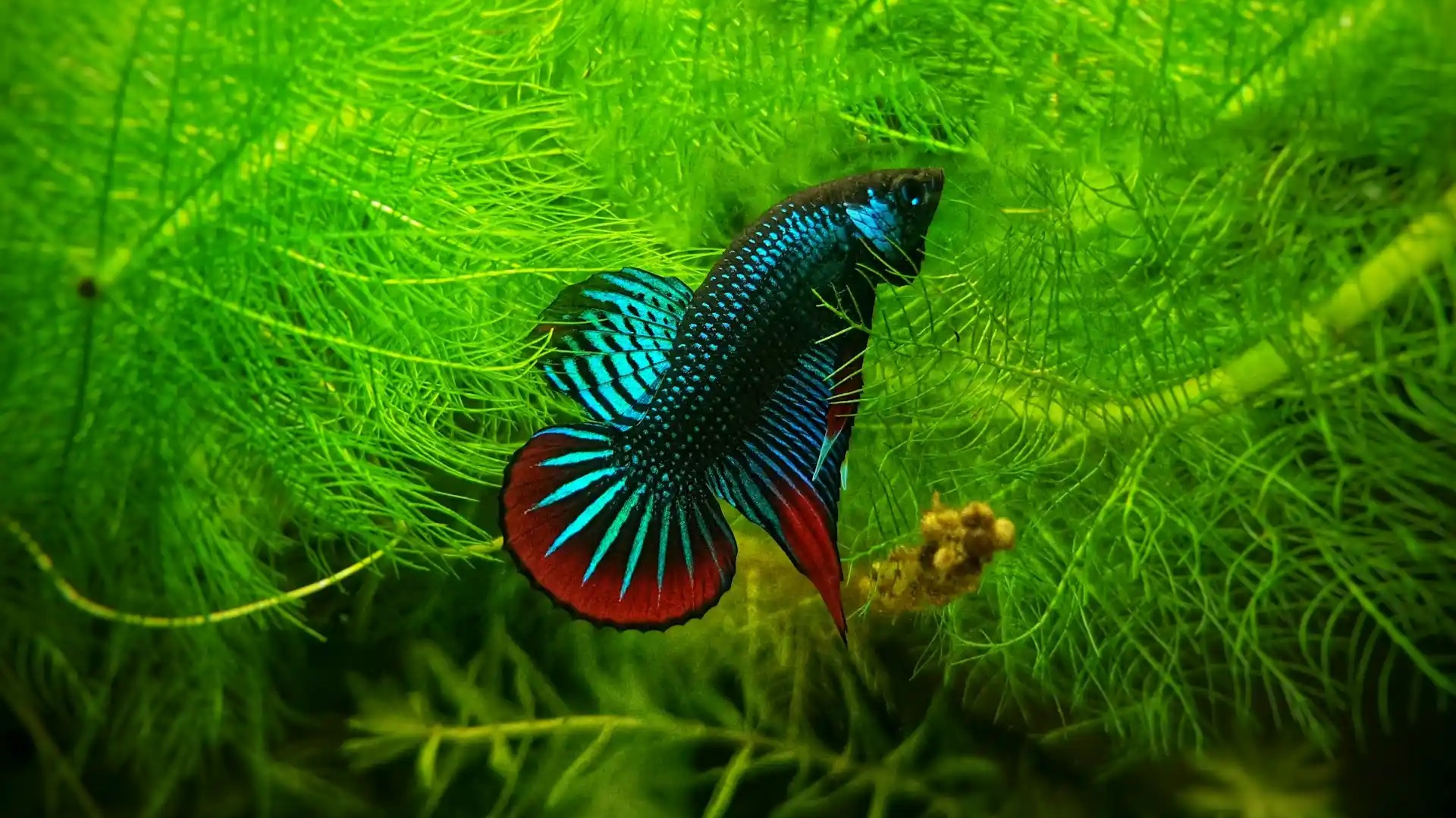
There is one exception worth flagging. The genus Betta contains dozens of true wild species beyond splendens, such as Betta imbellis, Betta mahachaiensis, and the mouthbrooding Betta picta. These do turn up in the hobby, but they are far less common and tend to look plainer than the fancy shop fish. For most people, "betta" means Betta splendens, and that is what the varieties below describe.
By tail and fin type
Fin shape is the main way bettas are grouped, and it is the easiest difference to spot. The names describe the outline of the tail, how the rays are structured, and how long the fins are overall.
Here is a quick side-by-side before the detail:
Type | Tail shape in short |
|---|---|
Veiltail | Long, drooping tail that falls to one side |
Halfmoon | Tail opens to a full 180 degree half-circle |
Delta / Super Delta | Triangular tail, wider than a veiltail, not quite a halfmoon |
Crowntail | Spiky, with the webbing reduced so the rays stick out |
Combtail | Milder crowntail, rays extend just past the webbing |
Plakat | Short-finned, close to the wild look |
Halfmoon plakat | Short-finned but with a broad, sharp-edged tail |
Double tail | Tail split into two lobes, taller dorsal fin |
Rosetail / Feathertail | Very ruffled halfmoon with extra layering |
Spadetail | Rounded tail that narrows to a point, like a spade |
Roundtail | Fully rounded tail with no point |
Veiltail
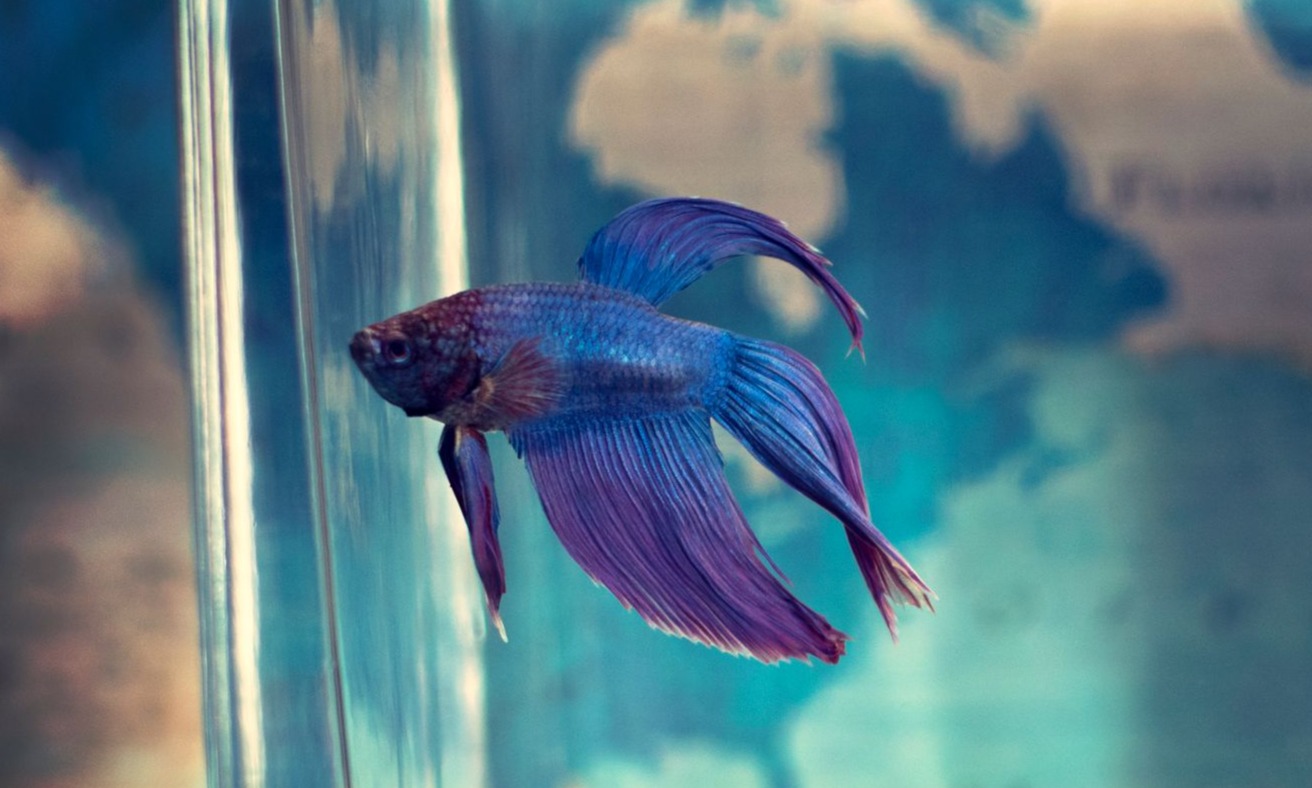
The veiltail is the classic pet-shop betta and the one most people picture. The tail is long and flowing, and it droops downward rather than holding a crisp shape. It is common and hardy in the sense of being widely bred, though the heavy fins can be a little tiring for the fish to carry.
Halfmoon
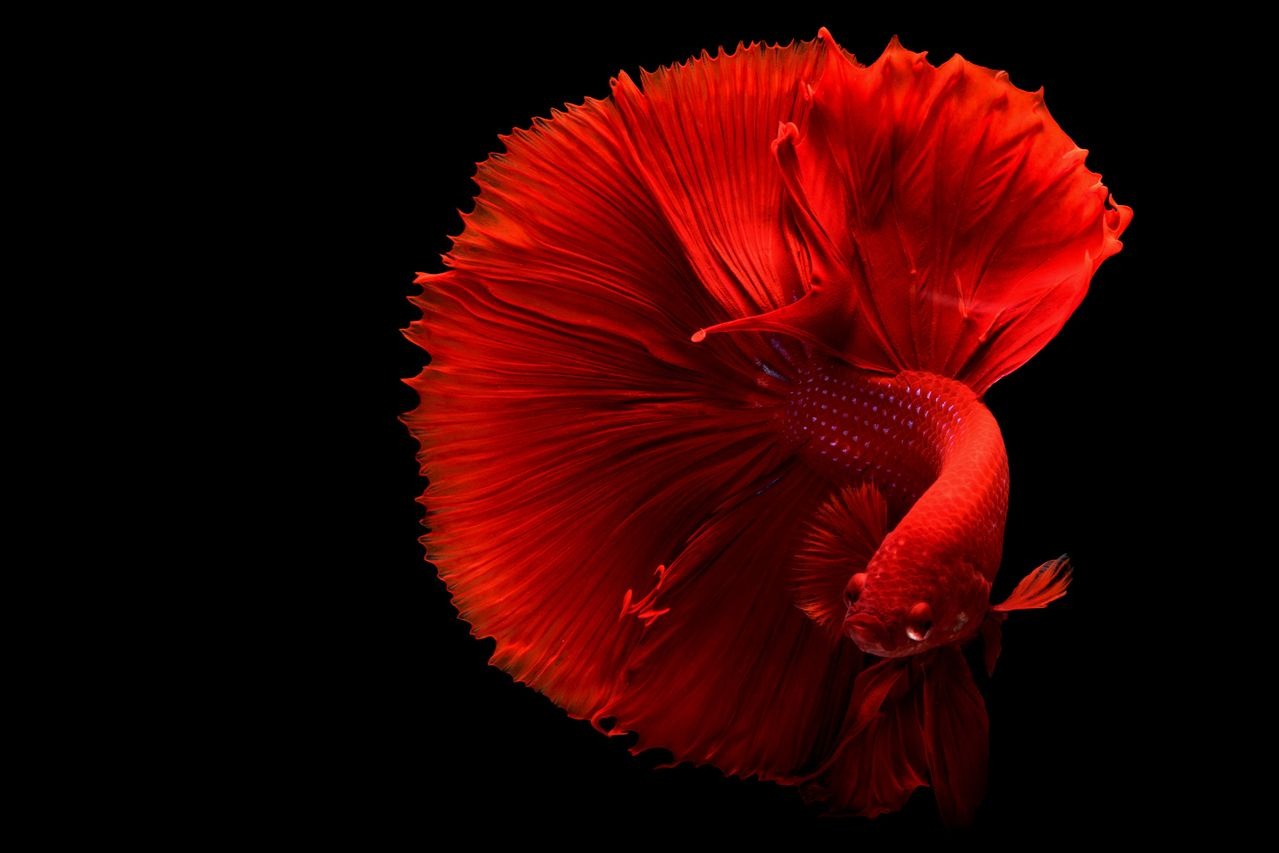
A halfmoon gets its name because the tail, when the fish flares, opens into a clean half-circle spanning a full 180 degrees. The edges are straight and the shape is symmetrical. It is one of the most prized fin types for its neat, fan-like spread.
Delta and super delta
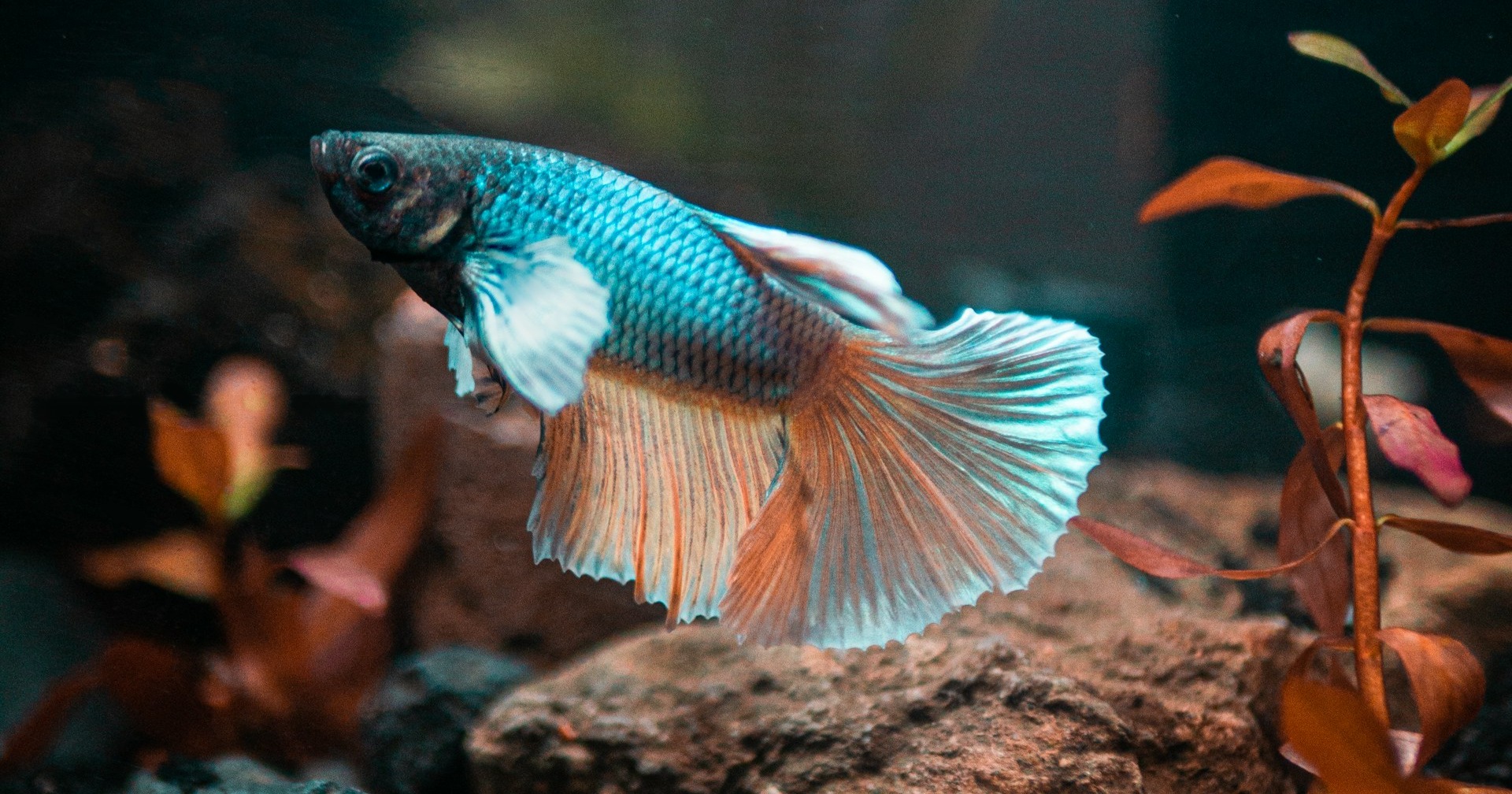
A delta sits between a veiltail and a halfmoon. The tail is triangular, like the Greek letter delta, and it holds a firmer shape than a veiltail without reaching a full half-circle. A super delta is the same idea pushed further, spreading close to 180 degrees but not quite making the clean halfmoon standard.
Crowntail
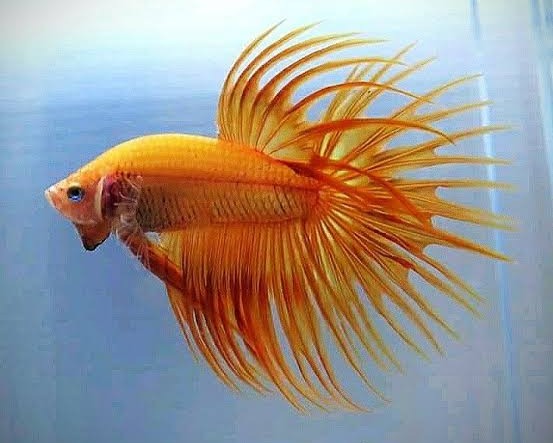
The crowntail is unmistakable. The webbing between the fin rays is reduced, so the rays project outward like the points of a crown or a spiky comb. The more the webbing is reduced, the more dramatic the spikes. It is a striking look, and the delicate rays need clean, gentle water to stay in good condition.
Combtail
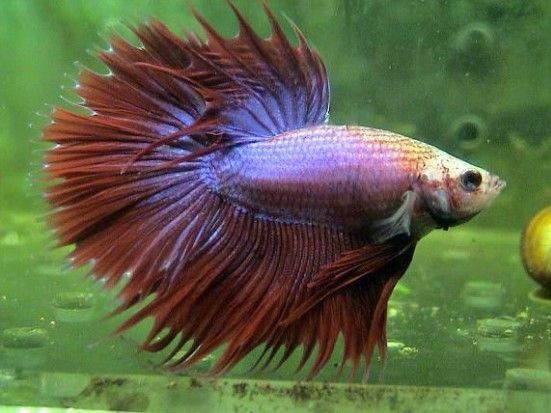
A combtail is a gentler version of the crowntail. The rays extend just slightly past the webbing, giving a softly toothed edge rather than long spikes.
Plakat
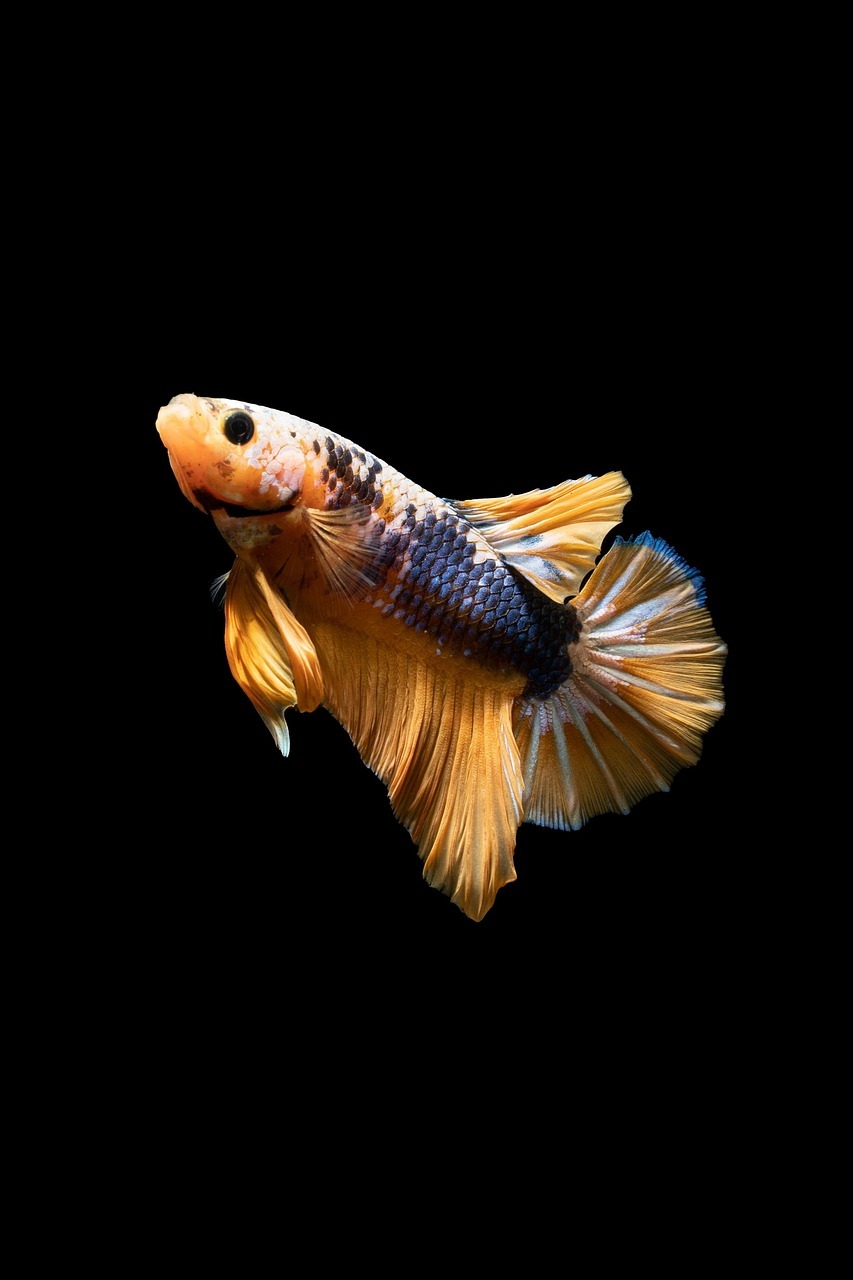
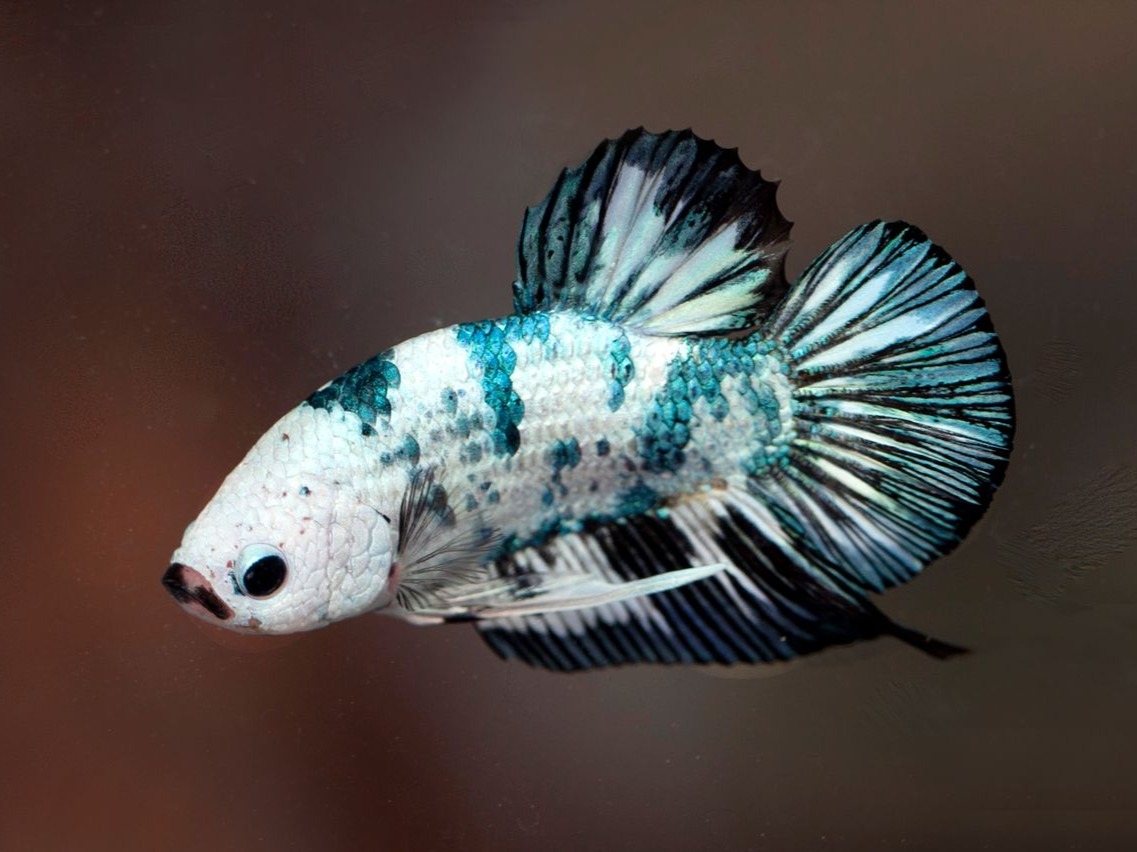
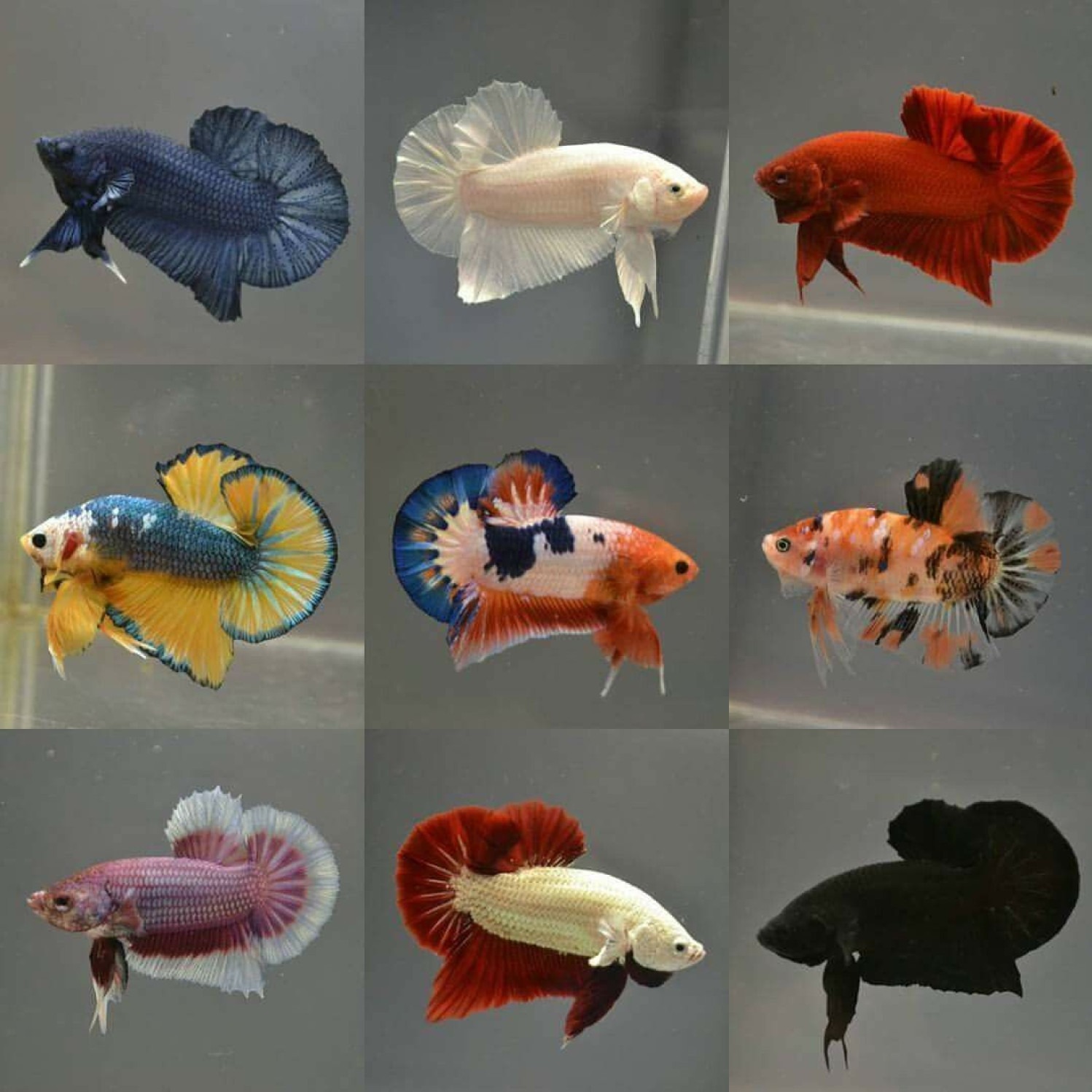
Plakat bettas are short-finned, and they look the closest to the wild ancestor. The word comes from Thai, and these fish were long bred for their sturdiness rather than flowing fins. Many keepers like plakats because the shorter fins are easier for the fish to swim with and less prone to tearing.
Halfmoon plakat
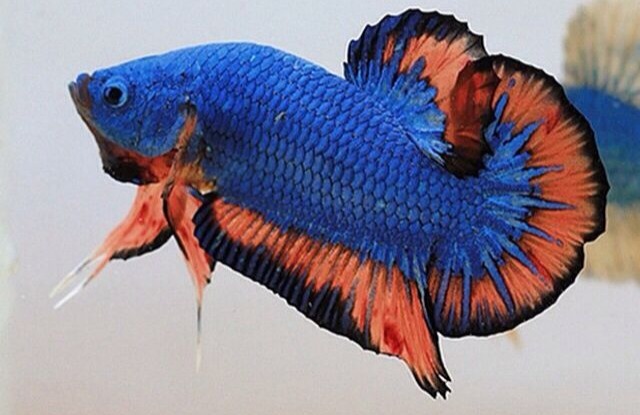
This one combines two ideas: the short fins of a plakat with the broad, sharp-edged, half-circle tail of a halfmoon. You get a compact, active fish that still flares into a wide, tidy spread. It is a popular show type.
Double tail
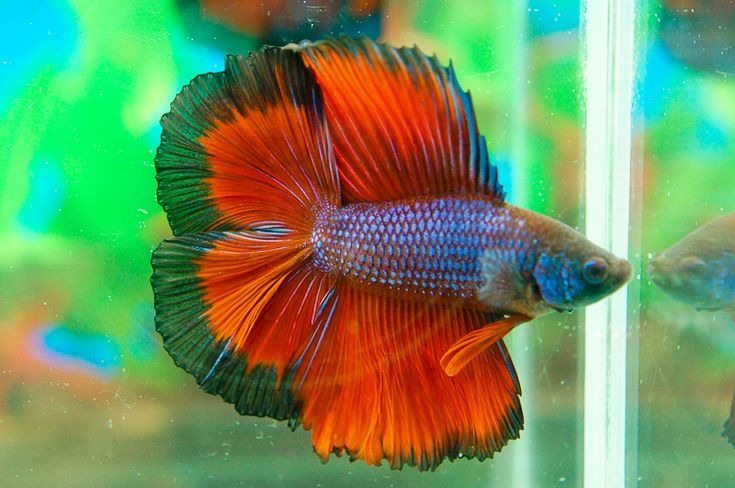
In a double tail, the caudal fin is split into two distinct lobes rather than one. The trait also tends to come with a taller, fuller dorsal fin along the back, which gives the fish a balanced, top-heavy look. Double tail genetics are often bred into other types to improve fin fullness.
Rosetail and feathertail
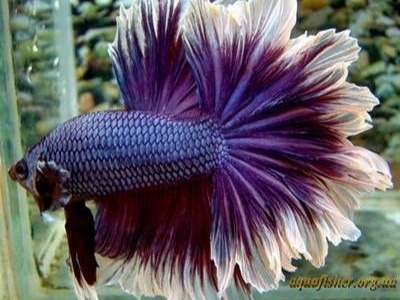
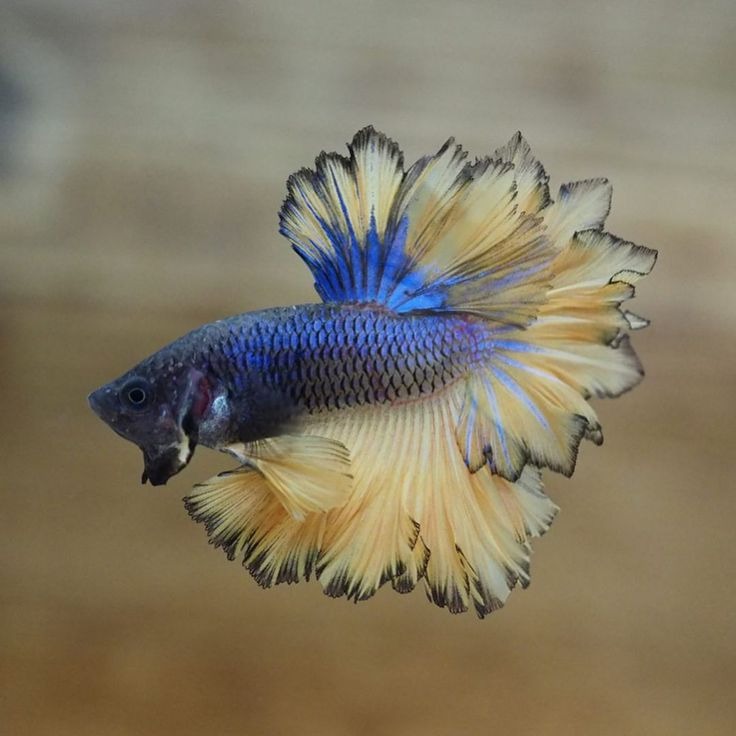
A rosetail is essentially a halfmoon taken to an extreme, with so much extra branching in the rays that the tail ruffles and folds like the petals of a rose. A feathertail goes even further, with a frilled, feathery texture. They can be beautiful, but it is worth being honest here: the most extreme rosetails carry so much fin that swimming becomes hard work, and the heavy finnage is linked to welfare and health problems. More fin is not automatically better for the fish.
Spadetail
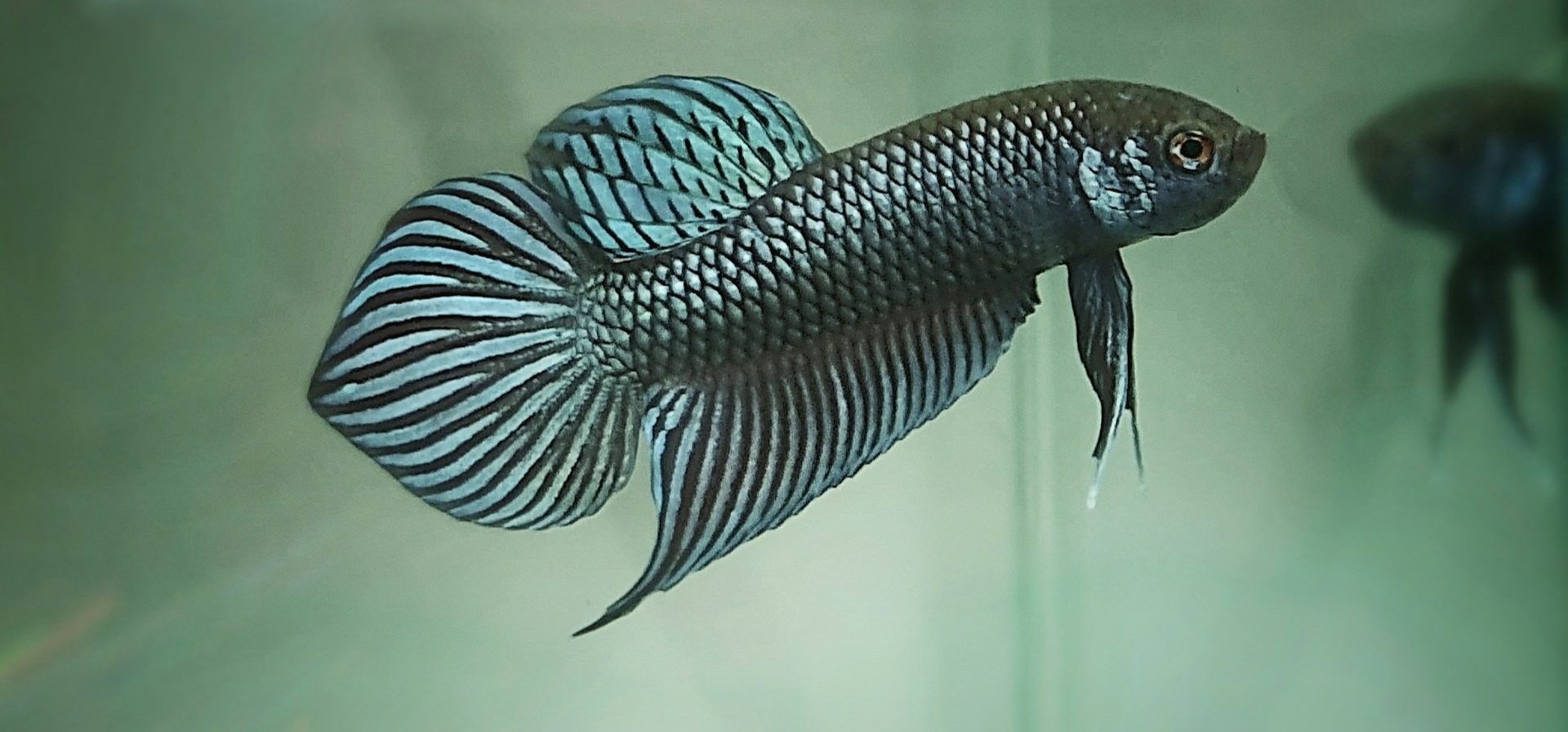
The spadetail has a tail that is broad at the base and narrows to a single point, much like the spade symbol on a playing card. It is an older, less common shape today, tidy and modest compared with the show types.
Roundtail
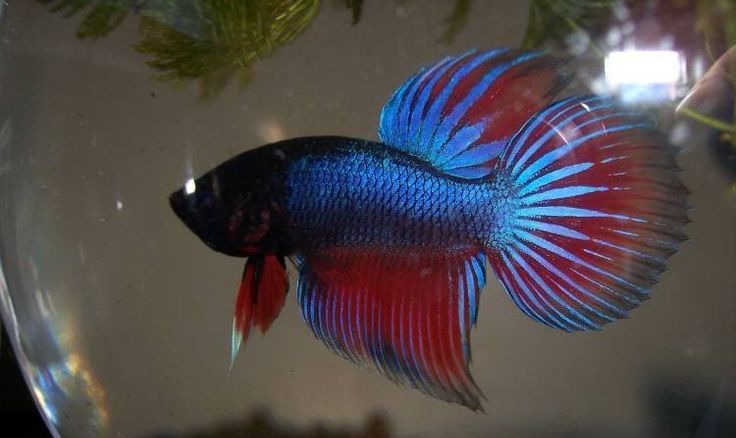
A roundtail is close to a spadetail but without the point. The edge of the tail forms a smooth, full circle. It is sometimes confused with the delta, but the rounded rather than straight edge is the giveaway.
By colour and pattern
Once you have the fin shape, the second layer is colouring. These terms describe how the pigment is arranged, and they can appear on almost any tail type. Betta colour can also shift as a fish grows, so labels are a snapshot rather than a promise.
Solid: a single, even colour across the whole body and fins, such as solid red or solid blue.
Bi-colour: the body is one colour and the fins are clearly another.
Marble: irregular, blotchy patches of colour that can actually change and move around over the fish's life, which makes each marble unique.
Butterfly: the colour on the fins is banded, usually a solid inner section that gives way to a pale or clear outer edge.
Koi: a marble-based pattern of red, white, black, and orange that echoes koi carp. Koi bettas are a favourite for their painterly, shifting looks.
Dragon scale: a metallic, thickened scale layer that lies over the body like armour, giving a bright, opaque sheen. The heavy scaling can occasionally overgrow onto the eyes, so it is a look worth choosing from a careful breeder.
Mustard gas: a well-known bi-colour where a dark blue or steel body meets yellow to orange fins with a defined edge.
Those are the ones you will hear most often. Breeders name many more combinations, but they are all variations on how colour sits on the body and fins.
A note on males, females, and wild-type
Two more distinctions help the whole picture click into place.
Males and females differ mainly in their fins. The showy, long-finned fish on display are usually males. Females of the same variety carry much shorter fins and are often a little smaller and less flamboyant, even when they share the same colour genetics.
Wild-type bettas look plainer than the fancy varieties on purpose. In the wild, Betta splendens is a fairly muted brownish-green fish with short fins and only a hint of colour, which helps it stay hidden. Every dramatic tail and vivid colour above is the result of many generations of selective breeding away from that modest starting point.
Quick reference recap
Almost all pet bettas are one species, Betta splendens. The "types" are mostly bred varieties, not different fish.
Tail and fin types include veiltail, halfmoon, delta and super delta, crowntail, combtail, plakat, halfmoon plakat, double tail, rosetail and feathertail, spadetail, and roundtail.
Colour and pattern types include solid, bi-colour, marble, butterfly, koi, dragon scale, and named looks like mustard gas.
Extreme rosetails and feathertails carry so much fin that it can cause swimming and health problems.
Females and wild-type bettas have shorter fins and plainer colouring than the fancy males on display.
Frequently asked questions
Are the different betta types separate species? Almost always no. The tail and colour types you see in shops are varieties of one species, Betta splendens. There are other true wild Betta species, but they are uncommon in the hobby and look plainer.
Which betta type is the healthiest to keep? No single label guarantees health, but shorter-finned types like plakats tend to swim more easily and tear their fins less than the heavily finned show types. The most extreme rosetails and feathertails are the ones most linked to fin-related problems.
Can a betta change colour or pattern over time? Yes. Marble and koi bettas are known for shifting patterns as they mature, and many young bettas develop or deepen their colour as they grow. A label reflects how the fish looks now.
How can I tell a male betta from a female? Fin length is the clearest clue. Males usually have the long, dramatic fins, while females of the same variety have noticeably shorter fins and are often a bit smaller.
Do wild bettas look like the ones in shops? Not really. Wild Betta splendens is a muted brownish-green fish with short fins. The vivid colours and elaborate tails are all products of selective breeding.
Key takeaways
Treat "types of betta fish" as mostly one species in different outfits: Betta splendens bred for fin shape, then colour and pattern.
Learn fin shape first, since it is the main grouping and the easiest to spot, from the flowing veiltail to the spiky crowntail to the short-finned plakat.
Read colour and pattern as a second layer that can sit on almost any tail type, and remember it may shift as the fish grows.
Be cautious with the most extreme finnage, as very heavy rosetails and feathertails can struggle to swim.
Keep the rarer wild Betta species in mind as a separate, plainer group from the fancy shop fish.