The question that splits a dinner table
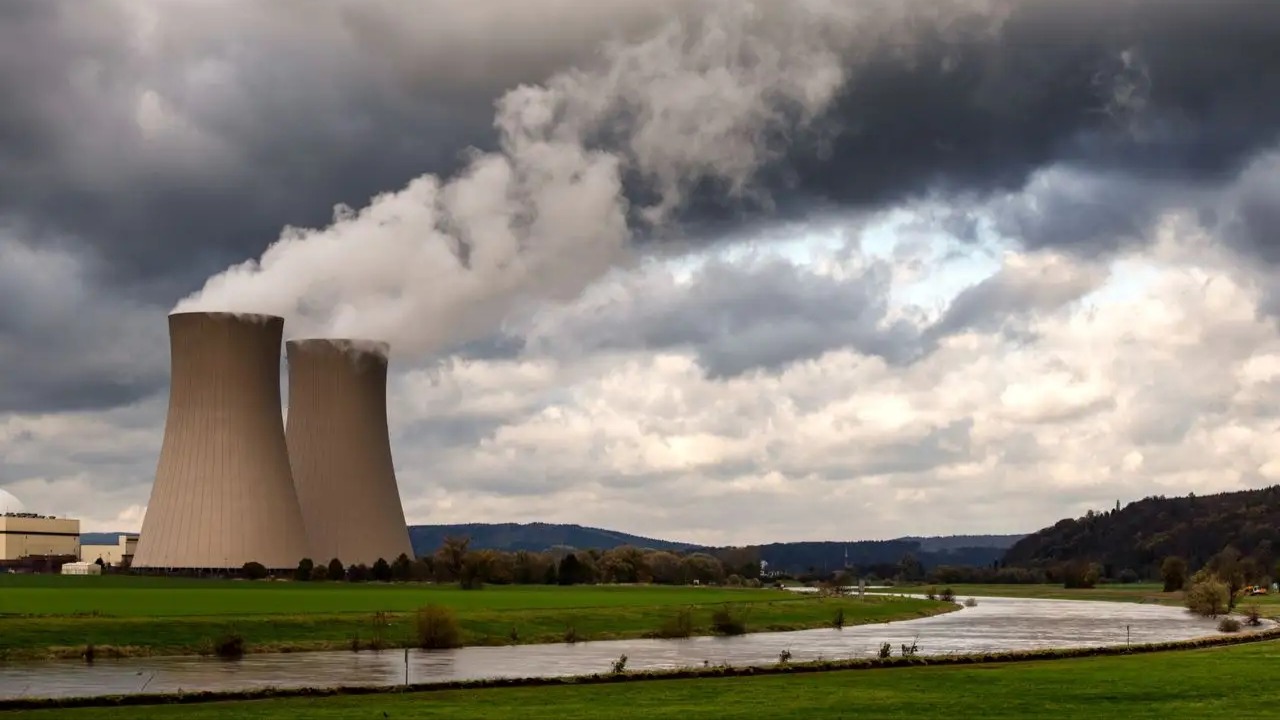
Bring up nuclear power at dinner and you can usually predict what happens next. One person calls it the cleanest reliable electricity we have. Another mentions waste, or a disaster they remember from the news, and the conversation stalls. Both people sound confident, and both can point to something real.
If you have ever felt unsure which side has the stronger case, you are in good company. Nuclear power is one of the few energy topics where thoughtful, well-informed people genuinely disagree. That is not because the facts are hidden. It is because the honest answer depends on which part of "green" you care about most.
This piece walks through what the evidence actually says, sets out the strongest points on each side, and leaves you better equipped to judge for yourself.
Why this matters to you
You do not run a power grid, so why should this land on your plate? Because the question shapes decisions you have a stake in. It influences where your electricity comes from, what your energy bills look like over decades, and how quickly the country you live in can cut its emissions.
Nuclear also shows up in everyday debate in a way few other technologies do. It appears in election manifestos, in company net zero pledges, and in arguments about whether a "clean energy" label really means what it says. Being able to reason about it calmly, rather than defaulting to enthusiasm or alarm, is a genuinely useful skill.
There is a lot of money and momentum riding on the answer too. The International Energy Agency (IEA) estimates that existing nuclear plants already avoid around 1.5 gigatonnes of global emissions a year, and it describes nuclear as today's second largest source of low-emissions electricity after hydropower. Whatever you conclude, this is not a fringe question.
How nuclear power works, and why the question is hard
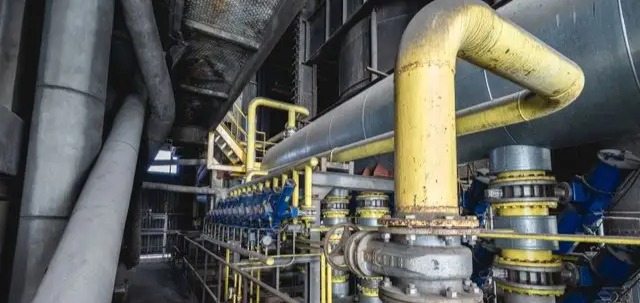
At its core, a nuclear plant is a very sophisticated way of boiling water. Inside the reactor, atoms of uranium are split in a controlled chain reaction called fission. That releases a large amount of heat, which turns water into steam, which spins a turbine, which generates electricity. The striking part is how little fuel this takes: a small amount of uranium releases an enormous amount of energy, and the process itself gives off no carbon dioxide.
That last point is where the confusion starts. When people say something is "green," they often blur together several different ideas that do not always move in the same direction.
Low-carbon means it emits little planet-warming gas.
Renewable means the fuel naturally replenishes and will not run out, like sunlight or wind.
Clean can refer to air pollution, or to waste, or to broader environmental harm.
Sustainable usually means it can continue for the very long term without serious damage.
Nuclear scores very differently on each of these. It is strongly low-carbon, but it is not renewable in the usual sense, because it runs on mined uranium, which is a finite resource. It produces almost no air pollution during operation, yet it does create radioactive waste. So whether nuclear counts as "green" depends heavily on which of those definitions you are quietly using. That is a large part of why the question is hard, and why two honest people can reach different answers.
What the evidence actually says
The case for nuclear
The strongest argument for nuclear is its carbon footprint over the full life cycle, not just at the moment of generation. Life cycle assessment tries to count the emissions from mining, construction, fuel processing, operation, and decommissioning, all of it.
On that basis, the numbers are low. The Intergovernmental Panel on Climate Change (IPCC), in its Fifth Assessment Report, put the median life cycle emissions of nuclear at around 12 grams of carbon dioxide equivalent per kilowatt-hour. That is comparable to onshore wind, and in several analyses lower than solar photovoltaic panels, which the same body of work places higher because of energy-intensive manufacturing. For comparison, gas is roughly 490 grams and coal around 820 grams per kilowatt-hour. Independent reviews summarised by Our World in Data reach a similar picture, drawing on United Nations Economic Commission for Europe (UNECE) life cycle data.
The second argument is reliability. Nuclear plants can run around the clock regardless of weather, providing what engineers call baseload power. They also contribute to grid stability in less obvious ways. The IEA notes that in one modelled carbon-neutral Chinese grid, nuclear would supply only about 10 per cent of electricity by 2060 yet provide almost half the system's inertia, a property that helps keep the grid stable. This is why the IEA and the International Atomic Energy Agency (IAEA) both argue that nuclear can complement wind and solar rather than compete with them.
There is also safety, which surprises many people. When you count deaths per unit of energy across the whole chain, including accidents and air pollution, nuclear sits among the safest sources. Figures compiled by Our World in Data, drawing on work by researchers including Markandya, Wilkinson, and Sovacool, put nuclear at well under 0.1 deaths per terawatt-hour, in the same low range as wind and solar, and dramatically below coal.
The concerns
None of that makes the concerns imaginary, and it is worth stating them at full strength.
The first is radioactive waste. Spent fuel stays hazardous for thousands of years, and no country has yet operated a permanent deep geological repository at scale. Finland is closest, with its Onkalo facility designed to isolate waste for up to 100,000 years, but the fact that this is described as a world first, decades into the nuclear age, tells you how genuinely difficult long-term storage has proven to be.
The second is cost and speed. New nuclear plants in Western countries have a track record of running badly over budget and behind schedule. The Vogtle expansion in the United States, for example, was originally expected to cost around 14 billion US dollars and open by 2017, but reports put the final cost near 30 billion dollars, with the last reactor entering service in 2024, roughly a decade late. The IEA has acknowledged that advanced economies have "lost market leadership" partly because of such overruns. When the climate challenge is urgent, a plant that takes ten to fifteen years to build is a real limitation.
The third is accident risk, which deserves to be kept in proportion rather than dismissed or inflated. Serious accidents at Chernobyl and Fukushima were rare, but their consequences were long-lasting and their effect on public trust was profound. The statistical safety record is strong, yet the low-probability, high-consequence nature of the worst outcomes is a legitimate reason for caution, and it helps explain why the technology attracts scrutiny that its accident count alone might not predict.

How to think about it as a citizen
You do not need to resolve this debate to engage with it well. A few habits help.
Separate "low-carbon" from "renewable." They are not synonyms. Nuclear can be genuinely low-carbon and still, accurately, not renewable. When a source or a politician uses "green" as a single word, notice which meaning they are relying on.
Ask about the full life cycle. The fairest comparisons count mining, building, and decommissioning, not just the moment electricity is produced. Any claim that ignores those stages is incomplete.
Weigh trade-offs rather than declaring winners. The useful question is rarely "is nuclear good or bad" but "compared to what, in this specific place, on what timescale, and at what cost." An answer that fits a windy coastline may not fit a landlocked grid.
Check who is speaking. Bodies such as the IEA, the IPCC, and the IAEA publish detailed, transparent analysis. That does not make them beyond question, but it is a sturdier starting point than a headline or a social media claim.
None of this requires you to be pro-nuclear or anti-nuclear. It just helps you tell a careful argument from a slogan.
Common mistakes to avoid, on both sides
It is easy to slip into one of two opposite errors here, so it is worth naming both.
If you lean sceptical, the mistakes to watch for are treating every nuclear plant as a disaster waiting to happen, and assuming the waste problem has no engineering answer. The safety data and the progress on geological disposal both complicate that picture, even if they do not close the debate.
If you lean enthusiastic, the mistakes are calling nuclear "renewable" when it is not, and waving away the cost and timeline problems as mere bad luck. Repeated overruns across different countries and decades look more like a pattern than an accident, and pretending otherwise weakens an otherwise reasonable case.
The shared mistake, common to both camps, is treating nuclear as a single yes-or-no verdict rather than a set of trade-offs that play out differently depending on geography, existing infrastructure, and how much you value speed versus reliability. Calm judgement usually beats a firm label.
Frequently asked questions
Is nuclear power renewable? No, not under the standard definition. Renewable sources rely on flows that replenish naturally, such as sunlight or wind. Nuclear fission runs on uranium, which is mined and finite. Some argue it should count as "sustainable" because known reserves and future fuel technologies could last a very long time, but that is a separate claim from "renewable," and it is worth keeping the two apart.
Is nuclear low-carbon or not? Over its full life cycle it is low-carbon. The IPCC's median estimate of around 12 grams of carbon dioxide equivalent per kilowatt-hour places it close to wind and well below gas and coal. The emissions come mainly from construction and fuel processing, not from generating the electricity itself.
What happens to nuclear waste? Most spent fuel is currently held in secure interim storage at or near the plants that produced it. The long-term plan in several countries is deep geological disposal, sealing the waste far underground. Finland's Onkalo repository is the first designed for this at scale, but as of now no country has one in full routine operation, which remains one of nuclear's genuine open questions.
Is nuclear power safe? By the measure of deaths per unit of energy produced, the evidence compiled by Our World in Data ranks nuclear among the safest sources, comparable to wind and solar and far safer than coal. The main caveat is that the rare severe accidents carry large and lasting consequences, which is a legitimate reason for careful regulation rather than a reason to disregard the strong overall record.
So is nuclear power green, or not? It depends on your definition. If "green" means low-carbon and reliable, nuclear has a strong claim. If it means renewable, or free of long-lived waste, it does not. Honest sources tend to land on "it plays a role," rather than a simple yes or no.
Key takeaways
Nuclear power is very low-carbon over its life cycle, with the IPCC putting it near wind and well below fossil fuels.
It is reliable and provides steady baseload power, which is why the IEA, the IPCC, and the IAEA see a potential role for it alongside renewables.
It is not renewable, because it depends on finite mined uranium, so "low-carbon" and "renewable" should not be treated as the same thing.
The real concerns are long-lived radioactive waste, high upfront cost and slow build times, and rare but serious accident risk, each worth keeping in proportion.
The honest conclusion is "it depends." The answer turns on which meaning of "green" you use, and on the specific place, timescale, and cost involved.
Related PetalPoko articles
Sources and further reading
International Energy Agency, Nuclear Power and Secure Energy Transitions (executive summary): https://www.iea.org/reports/nuclear-power-and-secure-energy-transitions/executive-summary
International Energy Agency, Nuclear energy system overview: https://www.iea.org/energy-system/electricity/nuclear-power
Our World in Data, What are the safest and cleanest sources of energy: https://ourworldindata.org/safest-sources-of-energy
IPCC Fifth Assessment Report, Working Group III, Annex III (technology-specific life cycle emissions): https://www.ipcc.ch/report/ar5/wg3/
World Nuclear Association, Carbon dioxide emissions from electricity: https://world-nuclear.org/information-library/energy-and-the-environment/carbon-dioxide-emissions-from-electricity
UNECE, Life Cycle Assessment of Electricity Generation Options (2022): https://unece.org/sites/default/files/2022-04/LCA_3_FINAL%20March%202022.pdf
International Atomic Energy Agency, A sustainable solution for spent fuel and high level waste disposal: https://www.iaea.org/bulletin/a-sustainable-solution-for-spent-fuel-and-high-level-waste-disposal
Science (AAAS), Finland's Onkalo geological repository: https://www.science.org/content/article/finland-built-tomb-store-nuclear-waste-can-it-survive-100000-years