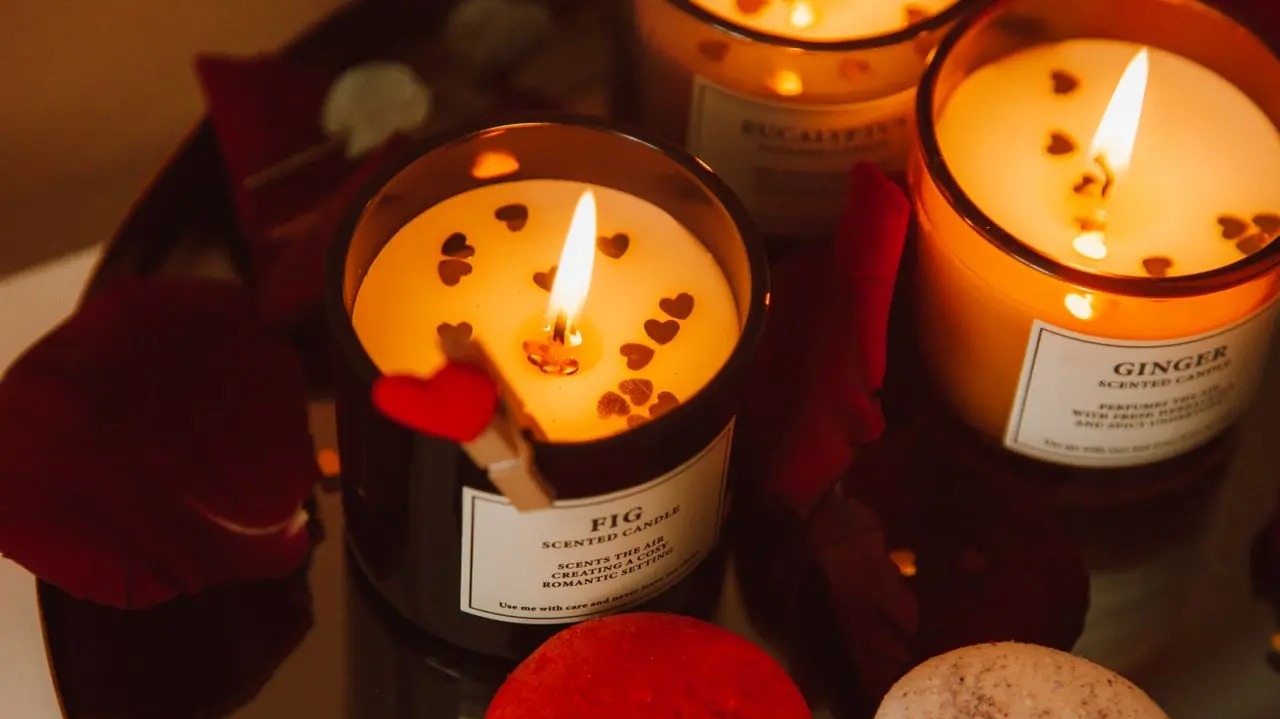
The question behind the flicker
You light a candle 🕯️ on a dark evening, the room softens, and somewhere in the back of your mind a small doubt flickers too. You have seen the headlines calling candles toxic, and you have seen the brands promising a cleaner, safer burn. Both cannot be right. So you are left wondering whether the thing you light to unwind is quietly working against you.
The honest answer sits between the two extremes. A burning candle does release things you would not choose to breathe in large amounts. It is also true that, for most healthy people using a candle now and then in a room with some airflow, the measurable risk appears small. The interesting part is the space in between, where the evidence is genuinely mixed and the marketing is confident well beyond what the science supports.
Why this matters in everyday life
Indoor air is where you spend most of your life, and it is often more polluted than the air outside. Anything you burn indoors adds to that load, and candles are one of the few things people deliberately set alight in a closed room for hours at a time. That makes them worth understanding properly, not panicking over.
It matters more for some people than others. If you have asthma, chronic obstructive pulmonary disease (COPD), or another respiratory condition, your airways react to irritants that a healthy person may not notice. The same is true for very young children, older adults, and anyone who burns candles daily in a small, sealed room. For everyone else, this is less about danger and more about small, sensible habits that keep a pleasant thing pleasant.
What a burning candle actually releases
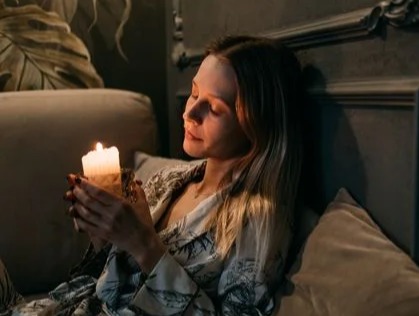
A candle is a small, controlled fire, and like any fire it does not burn perfectly. When the wax and wick combust, they give off a mix of gases and tiny particles. Understanding these in plain terms helps you judge the real risk rather than the scary version.
The most studied output is fine particulate matter, often written as PM2.5 and PM1. These are microscopic particles small enough to travel deep into your lungs. A 2025 study published in Scientific Reports measured particle levels in homes as a scented candle burned and found PM2.5 rising to around 31 micrograms per cubic metre roughly three metres away, with fine particles staying elevated across the full 60-minute burn and drifting well beyond the candle itself. The researchers stressed the value of ventilation to limit exposure.
Candles also emit volatile organic compounds (VOCs), which are carbon-based gases that evaporate easily at room temperature. If you want the fuller picture on these, PetalPoko has a separate explainer on VOCs. Burning also produces small amounts of combustion gases such as carbon monoxide and nitrogen oxides, and the fragrance and any incomplete burning can add aldehydes, including formaldehyde. A review from researchers at EPFL notes that candle emissions can include polycyclic aromatic hydrocarbons (PAHs) and BTEX compounds, some of which are classed as carcinogenic, while also finding that most measured pollutants stayed below relevant limits under normal conditions. The clear exception was fine particles, which could climb higher, especially where ventilation was poor.
Then there is soot, the black residue that can mark your ceiling or the inside of the jar. Soot is largely a sign of incomplete combustion, and it tends to worsen when a wick is too long or the flame is guttering in a draught.
What the evidence actually says
Here is where the marketing and the science part ways.
The wax debate is weaker than it sounds. You have probably read that paraffin is dirty and that soy or beeswax is clean. The most direct comparison, an internationally funded study by the German laboratory Ökometric, tested paraffin, soy, beeswax, palm, and stearin candles side by side and reported no significant differences in the composition or quantity of their emissions, with most compounds measuring far below indoor air standards. It is worth noting that this study was funded by candle industry groups, so it deserves the same scepticism you would apply to any industry-backed research. Even so, independent reviews have also struggled to rank one wax as clearly cleaner. The EPFL analysis found that oil content and candle shape affected emissions more than the base material, and that pure unscented paraffin sometimes emitted more BTEX and PAHs while scented candles produced more aldehydes from the fragrance. The takeaway is not that all waxes are identical, but that the confident soy-versus-paraffin story is not well supported by the evidence.
Fragrance and phthalates are a genuine open question. Scented candles generally produce more fine particulate matter than unscented ones, as noted in reporting drawing on indoor air research published by The Conversation. Some fragrances have historically used phthalates, a family of chemicals that help scent linger and that some studies link to hormone disruption. The evidence here largely comes from broader exposure to phthalates rather than from candles specifically, so it is fair to say the concern is plausible but the candle-specific risk is not well quantified. A 2024 paper in Environmental Science and Technology argued that scented candle exposure carries underappreciated risks, which tells you serious researchers take the question seriously, not that the case is closed.
Wick safety is largely a solved problem in some markets. Lead-cored wicks were a real hazard, capable of releasing meaningful amounts of lead into the air. The US Consumer Product Safety Commission banned them, effective October 2003, and most reputable manufacturers had already moved away from them. Modern wicks are typically cotton, paper, or wood. This is a good example of a past risk that has been addressed, and it is worth keeping separate from present-day concerns.
The respiratory bodies are cautious, not alarmed. The American Lung Association lists scented candles and air fresheners among common triggers for asthma and COPD flare-ups, and it cites guidance from the American College of Allergy, Asthma and Immunology suggesting that households managing asthma are best avoiding them. That advice is aimed at people with existing sensitivity. For a healthy adult, the same organisations do not treat an occasional candle as a serious threat.
Put together, the evidence supports a measured view. Candles add particles and some VOCs to your indoor air, the effect is real and measurable, and yet for most people using them moderately with airflow, the exposure appears low. The uncertainty is honest, and anyone telling you it is either perfectly safe or definitely harmful is going beyond what the data can show.
How to enjoy candles more safely
None of this means you have to give up candles 🙅🏻♀️. A few small habits address most of the measurable concerns.
Ventilate. Crack a window or a door so particles disperse instead of building up. Ventilation is the single most consistent recommendation across the research, from the 2025 particle study to the EPFL review.
Trim the wick to about five millimetres before each burn. A shorter wick means a smaller, steadier flame and noticeably less soot.
Avoid draughts. A flickering, dancing flame burns less cleanly, so keep candles away from open windows, fans, and doorways.
Do not overdo it. Occasional use is very different from burning several candles daily in a closed room. Frequency and room size shape your exposure more than the label does.
Give bigger, well-fitted candles the edge. A wick sized correctly for the wax pool tends to burn more completely than a starved or over-large one.
If you are sensitive, choose unscented or flameless options. The American Lung Association specifically suggests unscented or battery-operated flameless candles for people managing asthma.
Common mistakes to avoid
The most common mistake is treating the wax label as a health guarantee. Buying soy or beeswax may suit your preferences, but the evidence does not support the idea that it meaningfully protects your lungs compared with paraffin.
Another is ignoring ventilation because a candle feels gentle and cosy. Fine particles do not care how relaxing the setting is, and a sealed room lets them accumulate.
A third is letting a candle burn unattended for hours, which is both a fire risk and a way to build up more soot and particulate matter than a short burn would.
Finally, people often swing between the two extremes: either dismissing all concern as scaremongering or throwing out every candle in the house. Neither matches the evidence. The reasonable middle is moderate use with airflow, and a little extra care if you or someone in your home has a respiratory condition.
Frequently asked questions
Are soy or beeswax candles healthier than paraffin? The marketing says yes, but the direct evidence is weak. Side-by-side testing has struggled to show meaningful differences in emissions between wax types, and factors like wick quality, fragrance, and ventilation seem to matter more. Choose the wax you prefer, but do not rely on it as a health safeguard.
Do scented candles cause cancer? There is no good evidence that occasional candle use causes cancer. Candles can emit small amounts of compounds classed as carcinogenic, such as certain PAHs, but under normal use most measured levels stay below relevant limits. The realistic concern is heavy, poorly ventilated, long-term use rather than the occasional evening candle.
Is candle soot dangerous to breathe? Soot is fine particulate matter, which is not something you want to inhale in quantity. In practice, most soot comes from an untrimmed wick or a draughty flame, so trimming the wick and avoiding draughts reduces it substantially.
Should I stop using candles if I have asthma? Respiratory bodies including the American Lung Association suggest people managing asthma are best avoiding scented candles and air fresheners, since fragrance and particles can trigger symptoms. Unscented or flameless alternatives are a reasonable substitute. If in doubt, follow your own symptoms and your clinician's advice.
Are candles worse than air fresheners or incense? Incense generally produces considerably more particulate matter than candles. Air fresheners release VOCs without the combustion particles. Each has its own profile, so the better framing is to be mindful of everything you add to indoor air rather than to rank them against each other.
Key takeaways
Burning a candle releases fine particles and some VOCs, and this is real and measurable rather than imaginary.
For most healthy people using candles occasionally in a ventilated room, the evidence suggests the risk is low.
The paraffin versus soy or beeswax debate is not well supported by the science; the differences the marketing promises are largely unproven.
Lead-cored wicks were a genuine hazard but were banned in the US in 2003, and modern wicks are typically cotton, paper, or wood.
People with asthma or other respiratory conditions, and anyone burning candles heavily in a closed room, have the most reason to take extra care.
Ventilate, trim the wick, avoid draughts, and do not overdo it, and you address most of what the evidence actually flags.
Related PetalPoko articles
Sources and further reading
Kang et al., "Impact of scented candle use on indoor air quality and airborne microbiome," Scientific Reports, 2025: https://www.nature.com/articles/s41598-025-95010-0
"How home fragrances can impact indoor air quality and your health," The Conversation, 2024: https://theconversation.com/how-home-fragrances-can-impact-indoor-air-quality-and-your-health-244221
EPFL HOBEL, "Are candles toxic to indoor air quality?": https://www.epfl.ch/labs/hobel/are-candles-toxic-to-indoor-air-quality/
Ökometric study summary on candle wax emissions (industry funded), National Candle Association: https://candles.org/wp-content/uploads/2025/09/Summary-of-07-Okometric-study-on-candle-wax-emissions.pdf
US Consumer Product Safety Commission, "CPSC Bans Candles With Lead Cored Wicks," 2003: https://www.cpsc.gov/Newsroom/News-Releases/2003/CPSC-Bans-Candles-With-Lead-Cored-Wicks
American Lung Association, "Holiday Scents and Lung Disease Triggers": https://www.lung.org/blog/holiday-scents-asthma-triggers
"Beyond Aromatherapy: Illuminating the Underappreciated Risks Associated with Scented Candle Exposure," Environmental Science and Technology, 2024: https://pubs.acs.org/doi/10.1021/acs.est.3c07574
"Measurement and evaluation of gaseous and particulate emissions from burning scented and unscented candles," Environment International, 2021: https://www.sciencedirect.com/science/article/pii/S0160412021002154